
Jai Tudor Jones
Available for Work


Digital Sales Presentation (DSP)
Reimagining the digital homebuying experience as part of a nationwide transformation of Lennar's Welcome Home Centers.
Overview
DETAILS
ROLE
Lead Product Designer
COMPANY
Lennar
YEAR
2026
TIMELINE
5.5 Weeks | 3.5 weeks to leadership prototype; 2 additional weeks to development handoff
DESIGN CHALLENGE: BRIDGING DIGITAL AND PHYSICAL EXPERIENCES

Lennar launched a nationwide initiative to revitalize approximately 1,700 Welcome Home Centers (WHCs) across the United States and transform the physical spaces where prospective buyers discover and explore new homes.
As part of this initiative, I led the redesign of Lennar's Digital Sales Platform (DSP), creating an intuitive touchscreen experience that complemented the modernized interiors and better supported in-person homebuying conversations.
PREVIOUS EXPERIENCE
A Sales Tool That Fell Short of the Sales Experience
The Digital Sales Presentation (DSP) was designed to help New Home Consultants (NHCs) guide prospective buyers through community information, available homes, and floorplans during in-person appointments. However, disconnected workflows, fragmented storytelling, and missed opportunities to communicate value limited its ability to support meaningful buyer conversations and drive sales.
Key Experience Gaps Limiting Sales Effectiveness
01


Screenshots of the DSP's About Lennar page.
Weak brand storytelling failed to communicate value
The Welcome Home Center (WHC) is often a buyer’s first in-person interaction with Lennar and a critical opportunity to drive home sales. However, the DSP missed opportunities to differentiate Lennar’s offerings, communicate the value of the Lennar buying experience, and equip sales consultants to build buyer confidence and move prospects closer to purchase.
02


Screenshots of the DSP’s map experiences, showing three separate navigation flows that fragmented a single, cohesive story.
Fragmented navigation disrupted sales conversations
Navigating between three disconnected map experiences forced NHCs to piece together community amenities, location benefits, and available homes during buyer conversations. These interruptions disrupted storytelling and created friction at a critical point in the purchase journey.
03

Diagram of high friction user journey
Disconnected tools interrupted the buyer journey
NHCs relied on disconnected tools to manage buyer information, conduct tours, and coordinate follow-ups. Switching between the DSP and Salesforce introduced manual work and disrupted the transition from in-person appointments to post-tour engagement, creating friction in maintaining buyer relationships and advancing sales opportunities.
PRIMARY RESEARCH: GETTING CLOSER TO THE SALES EXPERIENCE

me


Photos from field research in Indianapolis, IN
Ahead of the DSP touchscreen redesign, I traveled to Indianapolis, Indiana, to conduct exploratory field research with Lennar's midwestern regional leadership and sales teams, where I validated reported pain points, existing NHC workflows, and identified high-impact opportunities to prioritize in the redesign.
Field Research Validated Three Redesign Priorities
Streamline Sales Workflows
1
Consolidate essential information and reduce navigation friction to support natural, uninterrupted sales conversations.
Improve Reliability & Usability
2
Address functionality gaps and account for connectivity limitations, touchscreen ergonomics, and real-world usage conditions.
Enable Flexible Storytelling
3
Give NHCs greater control to tailor presentations to buyer interests and communicate community value.
Research Outcome: Clarified Redesign Priorities
Firsthand observation helped validate existing pain points, uncover environmental and workflow constraints, and establish a clearer set of priorities for the touchscreen redesign.
SECONDARY RESEARCH: PHYSICAL EXPERIENCE DESIGN AND ERGONOMICS
To optimize the DSP for large-format touchscreens, I explored ergonomics, display placement, viewing angles, and interaction zones to support comfortable, natural interactions between consultants and buyers.
Key Insights:
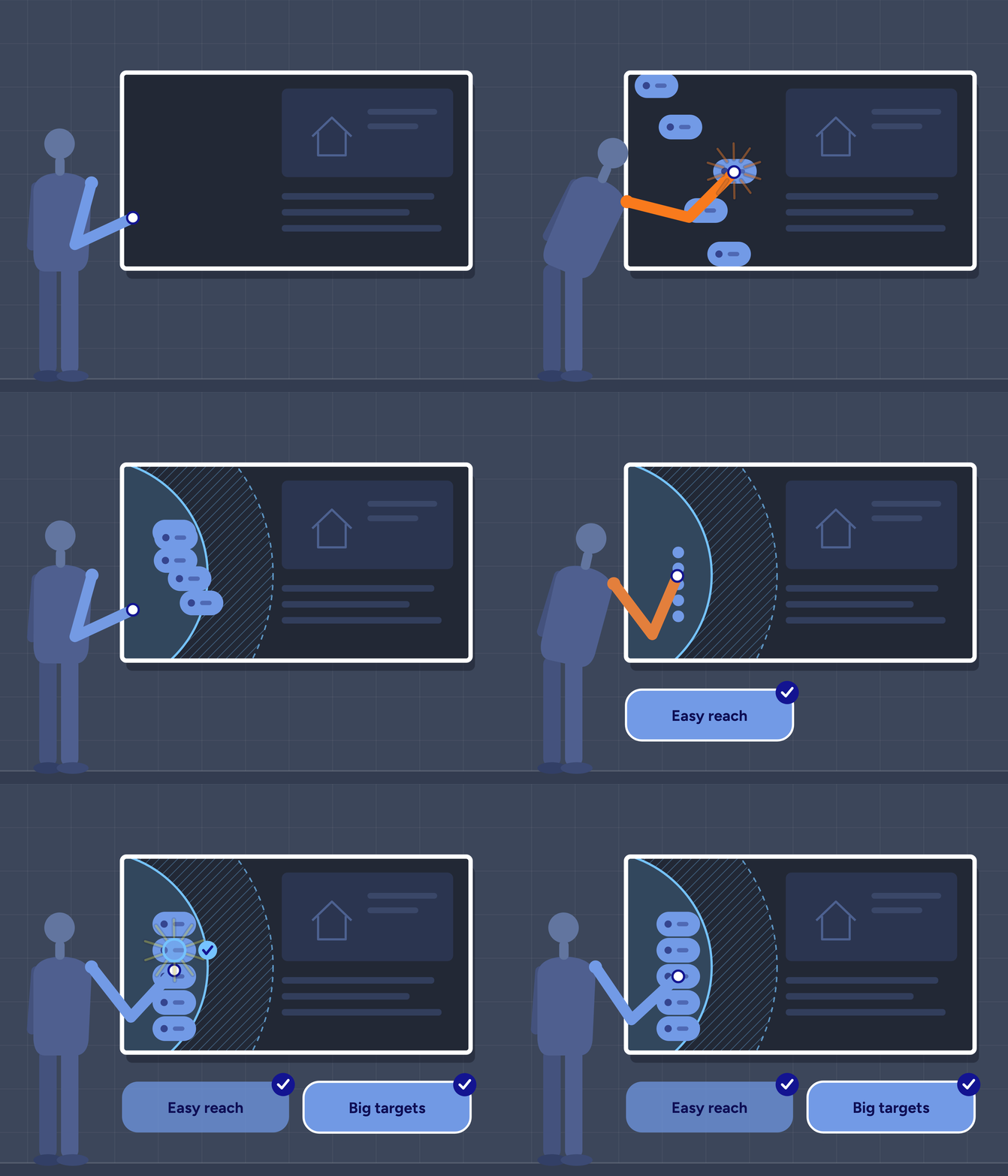
Minimize Physical Strain
Group frequently used controls within comfortable reach zones and use generous touch targets to reduce fatigue and unnecessary movement.
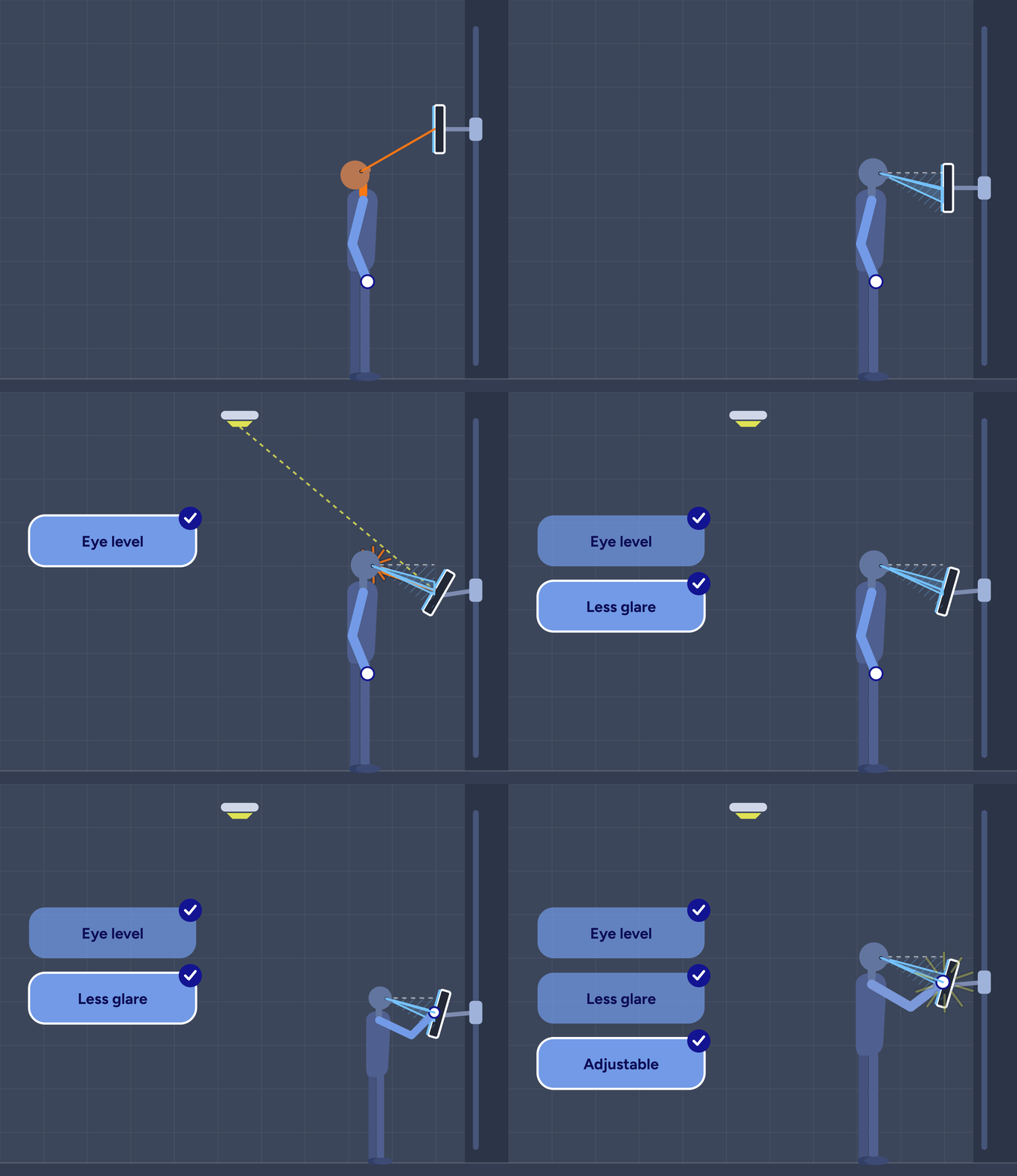
Optimize Visibility & Placement
Account for varying user heights, viewing angles, and screen positioning to improve legibility and minimize glare.
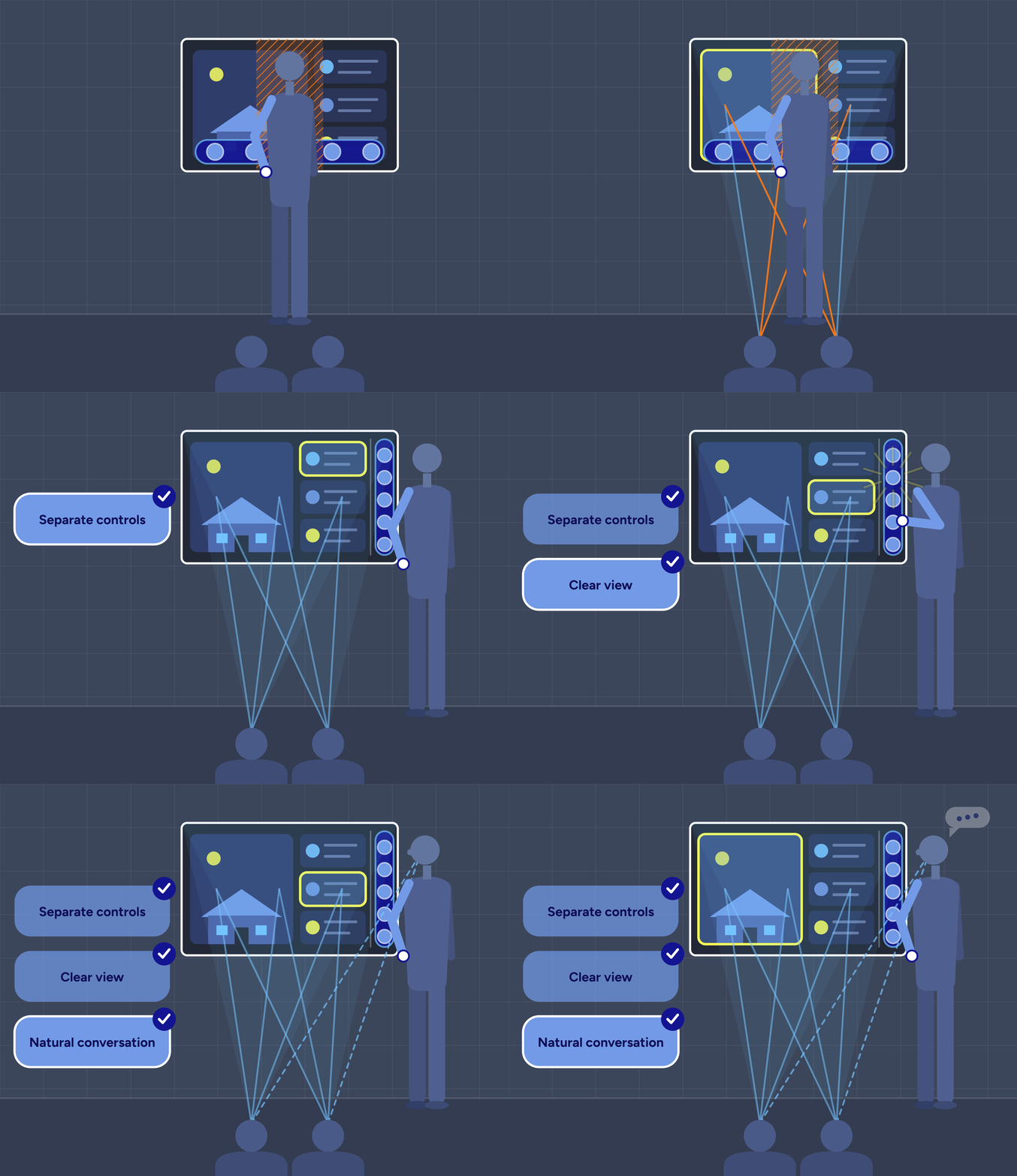
Support Shared Engagement
Separate interactive controls from presentation content to preserve buyers' visibility and support natural sales conversations.
Research References 📚:
-
Touchscreen Ergonomics: Al-Megren et al. (2015). Comparing Fatigue When Using Large Horizontal and Vertical Multi-touch Interaction Displays.
-
Display Placement & Visibility: OSHA. Computer Workstations: Monitors.
-
Shared Engagement: Inkpen et al. (2005). Exploring Display Factors that Influence Co-Located Collaboration.
SOLUTION: A SEAMLESS, CONNECTED HOMEBUYING EXPERIENCE
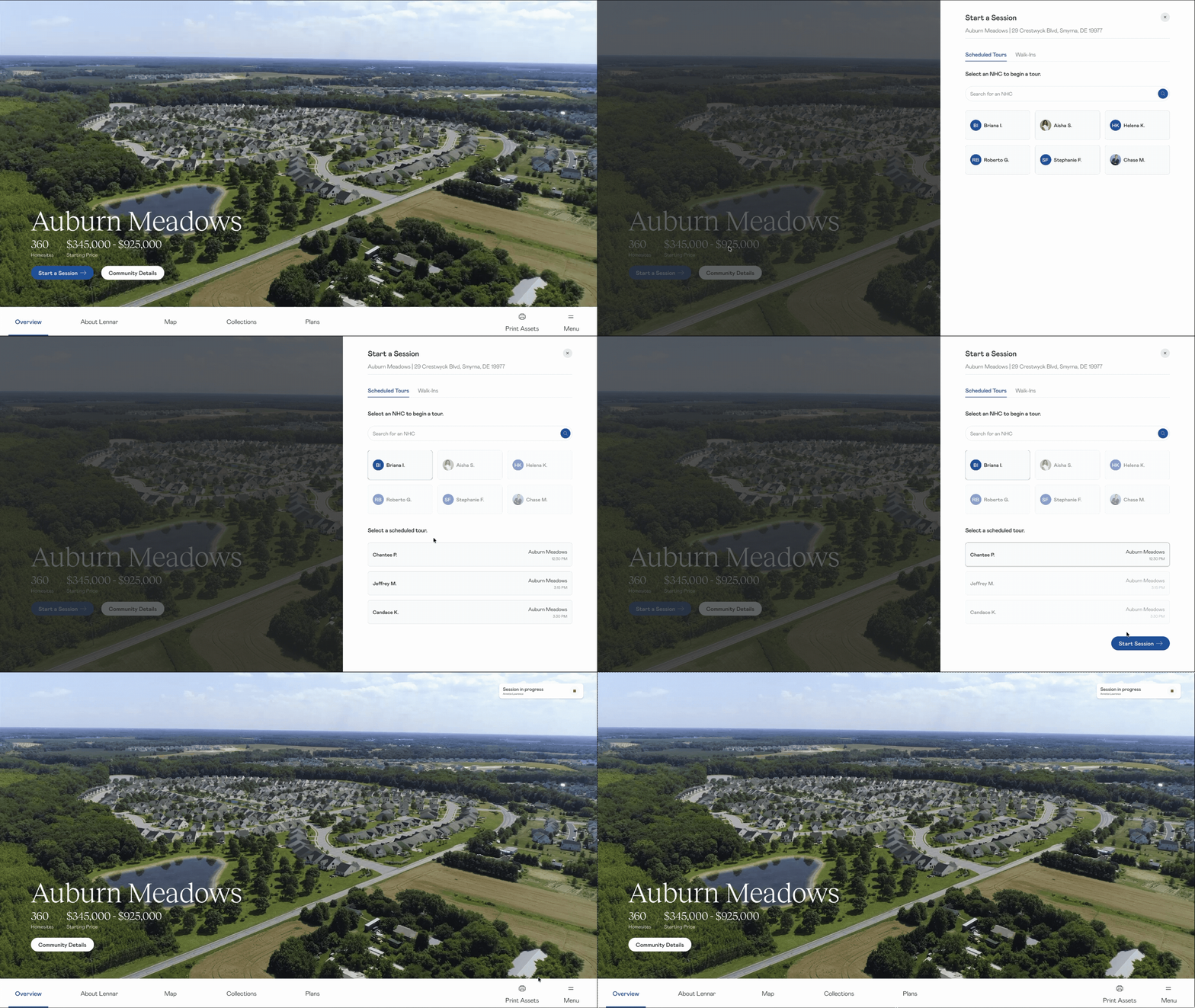
Personalized Tracking for Every Tour
I designed a session-based experience that allows NHCs to initiate and track individual buyer tours directly within the DSP. By connecting each session to Salesforce, consultants can capture tour activity and share relevant information with buyers afterward, creating a more seamless transition from in-person engagement to personalized follow-up.
02. Bringing Lennar's Value Proposition to Life
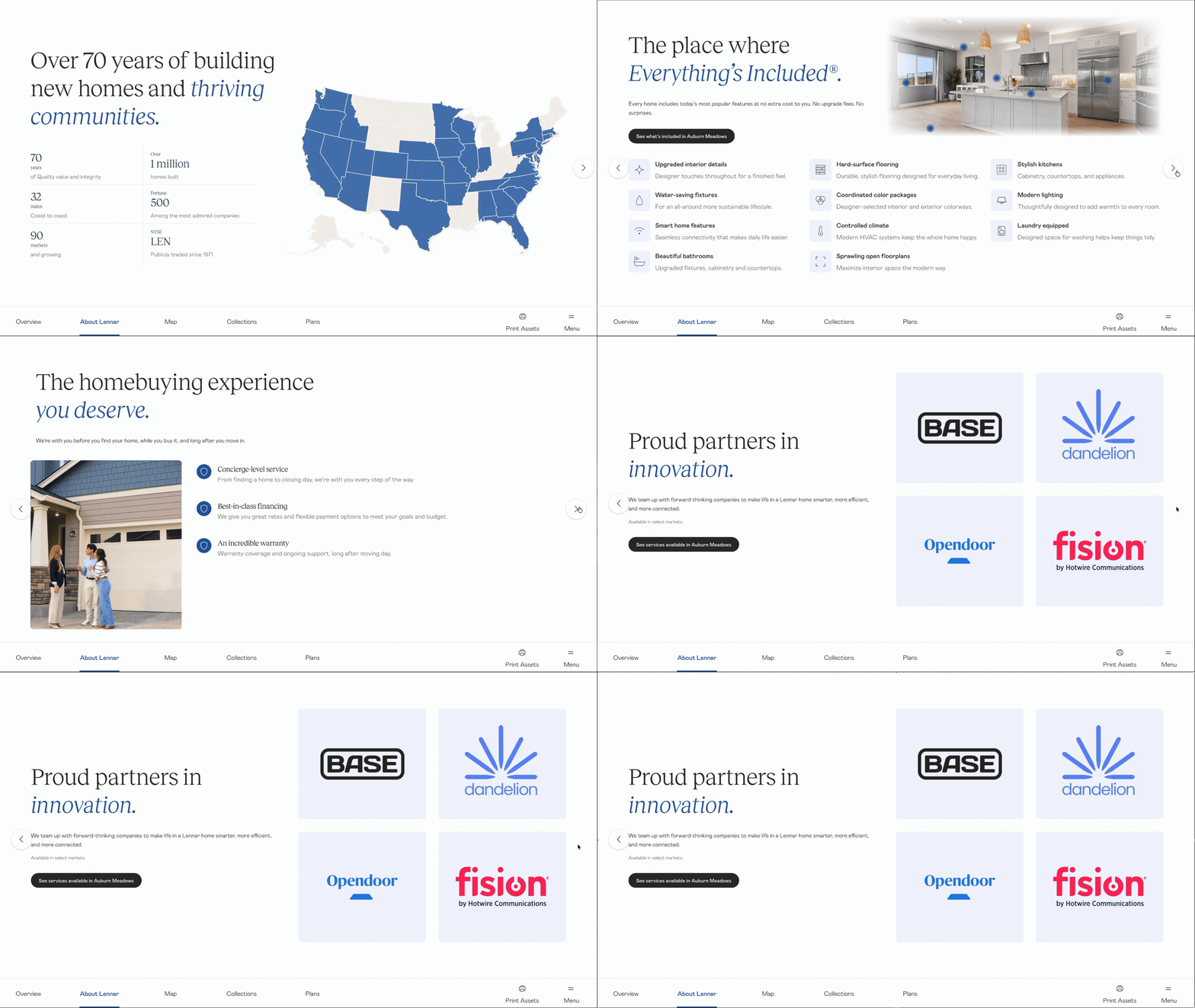
Redesigned the About Lennar experience to clearly communicate the benefits of buying with Lennar, highlighting concierge-level service, financing options, and warranty protection through compelling visuals and accessible content. This equips NHCs to differentiate Lennar's offerings, build buyer confidence, and reinforce value throughout the sales conversation.
03. Consolidating Maps for Seamless Storytelling
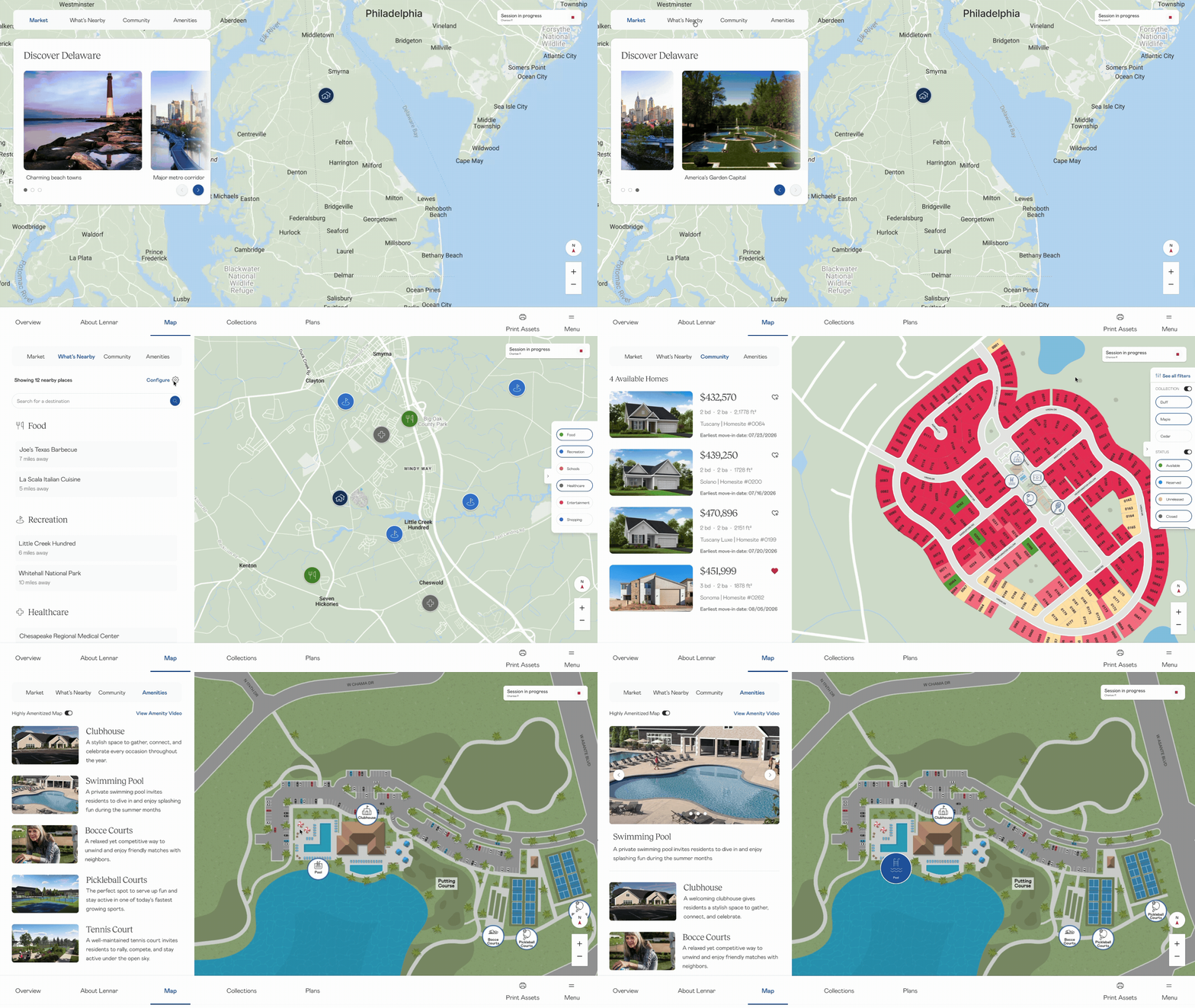
Consolidated three disconnected map experiences into one unified, interactive map, bringing together community amenities, nearby attractions, and available homes. This allows NHCs to navigate information more intuitively, maintain the flow of sales conversations, and tell a cohesive story about the community and surrounding lifestyle.
04. Designing for Touchscreen Ergonomics
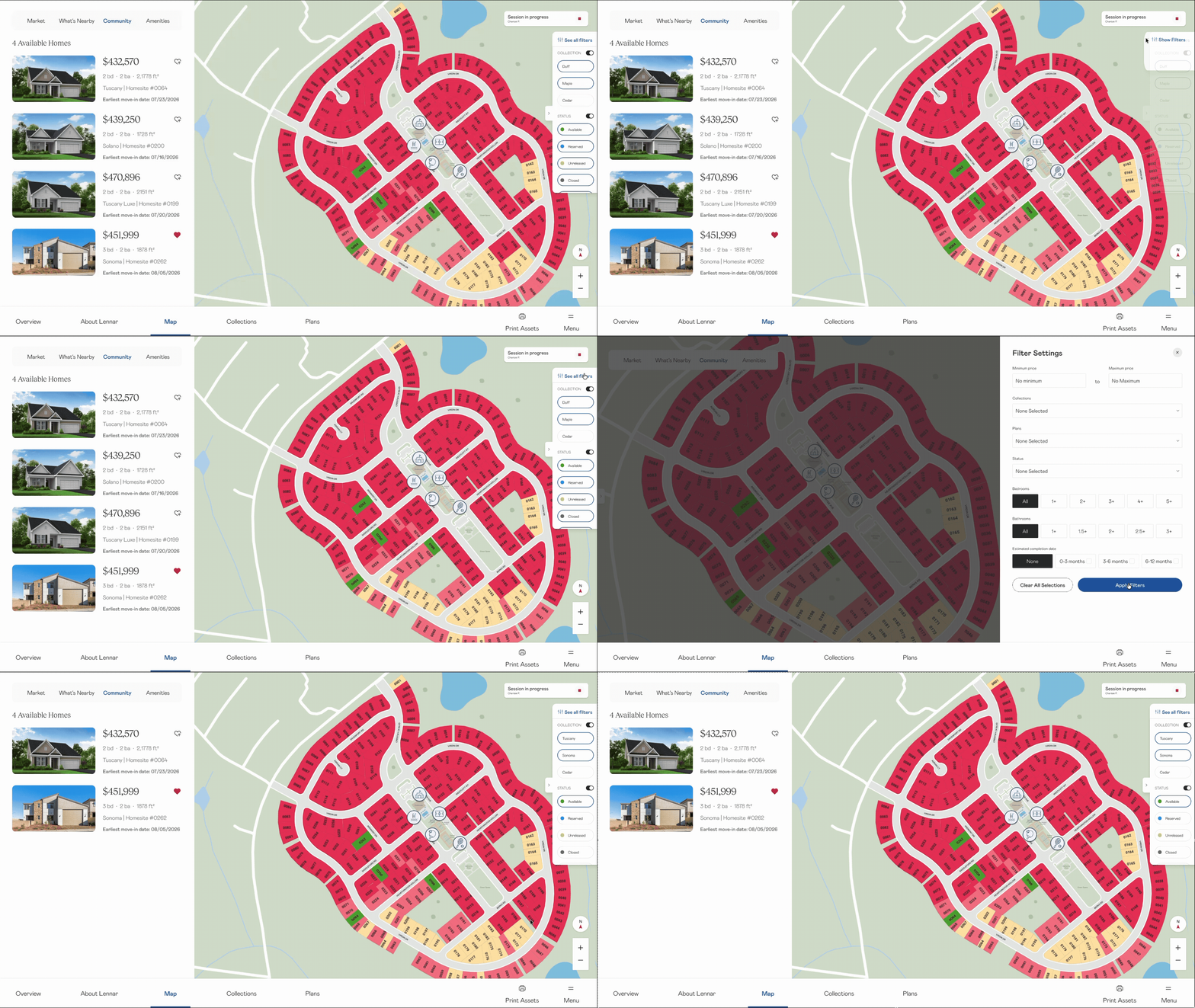
Designed the touchscreen experience to support comfortable, intuitive interaction in the Welcome Home Center. Primary controls were placed along the sides and bottom of the screen, while buyer-facing content remained centered to preserve visibility and support shared engagement. I also used appropriately sized touch targets to improve accuracy, reduce strain, and make navigation easier during live sales presentations.
PRE-LAUNCH VALIDATION
In-Person QA Testing
Advocated for physical device QA testing to validate the DSP under real-world conditions. Hands-on evaluation uncovered multiple usability issues and functional bugs missed during desktop testing, reinforcing the importance of testing on the intended hardware before rollout.
Video: Example of a map navigation bug uncovered during in-person touchscreen QA testing
Pre-Launch NHC Research
Collaborated with UX Research to shape research scope, develop testing materials, and gather feedback from 60+ survey respondents and four NHCs through video interviews ahead of launch. Research validated key workflows, uncovered usability gaps, and identified future feature opportunities to inform continued product development.
REFLECTION
Designing Beyond the Screen
The DSP redesign challenged me to think beyond traditional digital product design and consider how technology, physical environments, and human interactions shape the customer experience.
My biggest takeaway was that designing an effective solution requires understanding the entire experience it supports, not just the interface itself.